Process of Academic Assessment
Academic assessment at Chandler-Gilbert Community College (CGCC) is a systematic and ongoing process used to evaluate student learning in relation to student learning outcomes. Faculty examine what and how students are learning in mapped courses to identify strengths and areas for improvement at the program level.
This process supports:
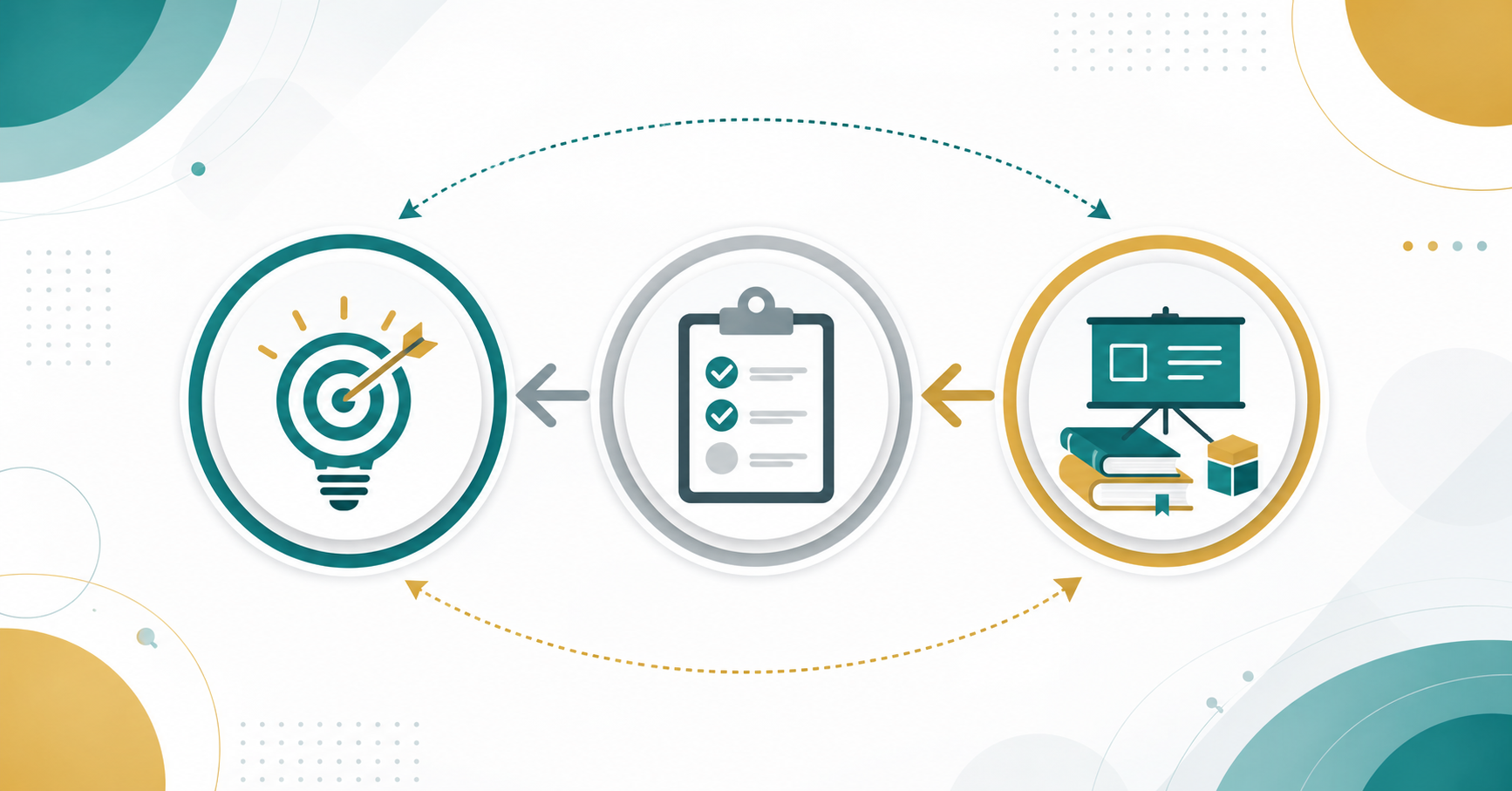
- Alignment between course-level instruction and program outcomes through curriculum mapping
- Data-informed curricular and instructional decisions
- Equitable learning opportunities for all students
- A culture of continuous improvement through faculty collaboration
The overarching goal is to enhance student achievement by using assessment as a tool for meaningful reflection and instructional development across programs.
Steps of the Process
- Curriculum Mapping
Program and discipline leads map Course Competencies or Course Learning Outcomes (CLOs) to Program Learning Outcomes (PLOs) in HelioCampus Assessment (HCA), establishing the foundation for data collection. Program and discipline leads also determine where in their curriculum the designated ILO of the Year will be assessed. - Assessment Cycle Scheduling
Discipline teams schedule when each course will be assessed across a five-year cycle, ensuring comprehensive and sustainable assessment coverage over time. Disciplines also select the GESLO, CLO, and mapped PLO (where applicable) for assessment. - Assignment Linking
Faculty link assignments in Canvas to the mapped outcomes in HCA, enabling consistent and measurable data collection aligned to course and program expectations. - Data Collection and Aggregation
Student performance data is collected from graded assignments and other measures, then aggregated through the HCA platform to provide insight into student achievement at the course, program, and institutional level. - Analysis and Reporting
Discipline teams review aggregated data, summarize key findings, and complete an assessment activity report that highlights strengths, gaps, and potential areas for improvement in student learning. - Implementation of Improvements
Based on assessment findings, faculty make targeted instructional or curricular changes at the course or program level to address identified needs and improve learning outcomes. - Evaluation of Changes (Closing the Loop)
As part of Program Review, implemented changes are evaluated to determine their effectiveness, promoting continuous improvement and informing the next cycle of assessment.
This integrated approach ensures that course-level assessments contribute directly to program-level insights, closing the loop on instructional effectiveness and student success.