At Chandler-Gilbert Community College (CGCC), assessment of student learning occurs across three interconnected levels, reflecting both local instructional priorities and the broader curriculum structure established by the Maricopa County Community College District (MCCCD):
Course-Level Learning Outcomes (Course Competencies)#
Course-Level Learning Outcomes—commonly referred to as CLOs, and officially called Course Competencies in the Maricopa Community College District (MCCCD)—define the essential knowledge and skills students are expected to master in each course. These outcomes are developed and approved by districtwide Instructional Councils (ICs) and are standardized across all MCCCD colleges. They serve as the foundation for classroom-level assessment and support CGCC’s commitment to high-quality instruction and continuous improvement.
Current assessment efforts are focused on mapping these CLOs to Program Learning Outcomes (PLOs) to provide a more comprehensive view of how student learning progresses across CGCC. Faculty can locate official MCCCD CLOs using the Course Search tool provided by the Center for Curriculum Transfer and Articulation (CCTA).
Institutional Learning Outcomes: General Education Student Learning Outcomes (GESLOs)#
Developed locally at CGCC, these institutional-level outcomes articulate the transferable skills and habits of mind expected of all students earning degrees and certificates. Faculty assess these outcomes regularly across disciplines and modalities, in alignment with college-wide priorities.
Development of the GESLOs#
The development of CGCC’s General Education Student Learning Outcomes (GESLOs) was rooted in broad faculty collaboration, aligned with national best practices, and informed by CGCC’s mission to empower students through learning and community engagement. The process also responded to institutional goals for continuous improvement and accountability, including compliance with the Higher Learning Commission’s Criterion 4: Evidence of student learning and teaching effectiveness.
The GESLOs articulate the core transferable skills expected of all graduates and reflect CGCC’s values of equity, innovation, and student success. These outcomes are designed to ensure both disciplinary integrity and cross-disciplinary alignment, supporting transparency, improvement, and institutional effectiveness.
CGCC has identified four General Education Student Learning Outcomes:
- Critical Thinking: The process of analyzing, evaluating, applying, and synthesizing information, characterized by reflection, connection of ideas, and reasoned judgment.
- Communication: The purposeful development, expression, and reception of a message through oral and nonverbal means
- Literacy: The integrated abilities to locate, evaluate, and ethically use information in the creation of new knowledge and participation in learning communities.
- Personal Development: Lifelong learning behaviors that promote student success and informed decision-making, while contributing to equity and community engagement.
Each GESLO is supported by a set of measurable indicators that guide assessment and ensure consistency across courses and disciplines.
GESLO Indicators#
#
Critical thinking is the process of appropriately analyzing, evaluating, applying and synthesizing information. It is characterized by reflection, connection of new information to existing knowledge and reasoned judgment.
Indicators#
- CT.1: Application
- Students can apply knowledge and skills in a different context or situation or task.
- CT.2: Analysis
- Students can organize information into its component parts.
- Students can identify relationships within information and its component parts.
- CT.3: Synthesis
- Students can assemble parts or components to create a whole.
- Students can originate through the use of parts or components.
- CT.4: Evaluation
- Students can assess the relative value of ideas and information.
- Students can justify their conclusions.
#
Effective communication is the purposeful development, expression, and reception of a message through oral and nonverbal means.
Indicators#
- CO.1: Message Delivery
- Adapt the delivery of the message in context.
- How thorough and with what completion have students adapted the delivery of the message in context?
- Adapt the delivery of the message in context.
- CO.2: Audience Analysis
- Adapt the message for an audience.
- How effectively have students adapted the message for an audience?
- CO.3 Message Purpose
- Adapt the message to meet the purpose(s)
- How effectively and consistently have students adapted the message to meet the purpose(s)?
- CO.4: Verbal Interaction
- Adapt effective language in the conveyance of ideas and information.
- How effectively and with what quality have students adapted language in the conveyance of ideas and information?
- CO.5: Non-Verbal Interaction
- Utilize Paralanguage (tone, rate, volume, inflection, etc.).
- Utilize Kinesics (facial expression, gestures, and overall movement).
- How well can students apply Paralanguange and Kinesics?
- CO.6: Presentation Graphics Support
- Apply graphics to support presentation.
- How effectively do students apply graphics support to the presentation?
#
Information literacy is the set of integrated abilities encompassing the reflective discovery of information, the understanding of how information is produced and valued, and the use of information in creating new knowledge and participating ethically in communities of learning.
Indicators#
- Inquiry Process
- IL.1.A: Adapt the delivery of the message in context.
- IL.1.B: How thorough and with what completion have students adapted the delivery of the message in context?
- IL.1.C: Formulate questions for research based on gaps or on reexamination of conflicting information.
- IL.1.D: Determine an appropriate scope of investigation.
- IL.1.E: Organize information in meaningful ways.
- IL.1.F: Determine the initial scope of the task required to meet their information needs.
- IL.1.G: Match information needs and search strategies to appropriate search tools.
- Contextual Authority
- IL.2.A: Monitor gathered information and assess for gaps or weaknesses or multiple perspectives.
- IL.2.B:Analyze materials for audience, context, and purpose.
- IL.2.C:Determine the credibility of sources based on author, content, format, assignment need, etc.
- Creation Process
- IL.3.A: Contribute to scholarly conversation at an appropriate level.
- IL.3.B: Synthesize ideas gathered from multiple sources.
- IL.3.B: Draw reasonable conclusions founded on the analysis of information.
- IL.3.B: Develop an understanding that their own choices impact the purpose for which the information product will be used and the message it conveys.
- Ethical Use
- IL.4.A: Give credit to ideas of others through proper citation and attribution.
#
Personal development involves engaging in life-long learning processes resulting in behaviors promoting student success as well as contributing to building a more equitable, empowered community and society in general through informed decision-making and responsible actions.
For proficiency, students will demonstrate the following as appropriate to discipline, course, or level of engagement:
Indicators#
- PD.1: Recognizing learning as part of a process that includes continued development while identifying lessons learned and strategies for improvement.
- PD.2: Setting and monitoring short term and long-term goals.
- PD.3: Recognizing the role of behaviors, emotions, attitudes, and relationships in personal, academic, and community success and well-being.
- PD.4: Engaging in reciprocal process(es) that lead to identifying and seeking deeper understandings of community needs and stakeholders.
- PD.5: Contributing to the building/shaping of a more equitable, empowered community and society by developing positive relationships based on mutual respect and understanding.
- PD.6: Collaborating with community stakeholders identifying/creating plan(s) of action responding to identified needs based on informed decision-making.
- PD.7: Identifying actions taken to better one’s self, community, and society based on informed decision-making.
- PD.8: Engaging in ethical and responsible actions that are mutually beneficial to all stakeholders.
Program Learning Outcomes#
Also defined at the District level through Instructional Councils, PLOs describe the integrated learning students should achieve upon program completion. CGCC’s commitment is to integrate Program Assessment into the college-wide assessment efforts so that the current course assessment and discipline assessment processes will contribute to program assessment by mapping PLOs to their aligned CLOs. Find PLOs by searching for programs using the MCCCD Center for Curriculum and Transfer Articulation (CCTA) Program Search.
Explore More Assessment Articles#

Assessment Process at CGCC #
Process of Academic Assessment Academic assessment at Chandler-Gilbert Community College…

Learning Outcomes at CGCC #
At Chandler-Gilbert Community College (CGCC), assessment of student learning occurs…
HelioCampus Assessment (HCA) Guides #
HelioCampus Assessment (HCA) is the tool CGC uses for program-level…
Assessment Resources: Templates and Tools #
Assessment Tools Use the resources below to locate assessment documents,…
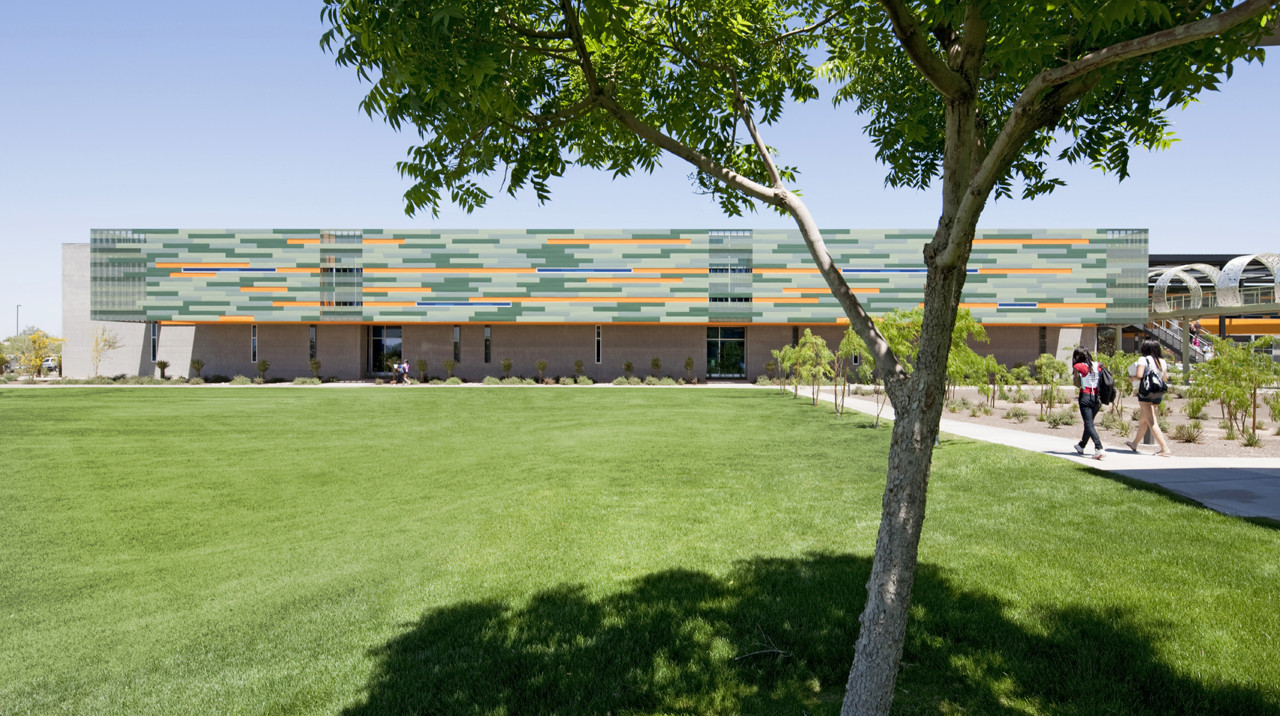
Assessment at Chandler-Gilbert Community College #
At Chandler-Gilbert Community College, assessment is a collaborative, faculty-driven process…